
What Is It Like Living in Eagan, Minnesota?
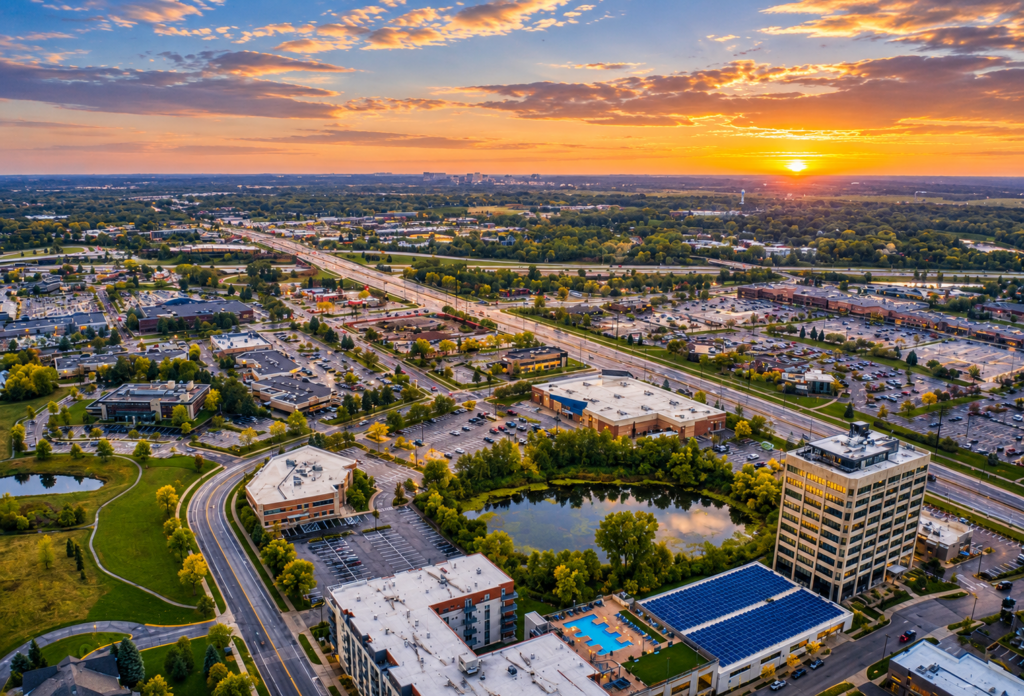
People ask me this all the time, usually right after they have narrowed their search down to a handful of suburbs and Eagan keeps popping up on the list. So here is the honest version, the one I would give a friend over coffee instead of a chamber of commerce brochure. The quick answer: Eagan is a well organized, convenient, family friendly suburb just south of St. Paul that works especially well for people who want easy airport access, strong parks and trails, and a mix of housing types without a huge price jump from one neighborhood to the next. Location and Commute Eagan sits in Dakota County, wedged between the Minnesota River and the southern edge of St. Paul, with Minneapolis Saint Paul International Airport just a few minutes away. That airport proximity is a genuine selling point for a lot of my clients who travel for work. You get quick access to 35E and 494, which puts downtown St. Paul within a short drive and downtown Minneapolis within reach without too much drama, at least outside of peak rush hour. Housing Stock Eagan built out mostly from the 1970s through the 2000s, so you will find a wide range of styles. There are split levels and ramblers from the earlier decades, plenty of two story family homes from the 80s and 90s, and newer construction and townhomes in the areas that developed later, particularly toward the southern and eastern edges of the city. Because the city grew in phases rather than all at once, buyers can often find a price point that fits without having to leave Eagan altogether, which is not always true in suburbs that built out fast in a single era. Schools Eagan is served primarily by Independent School District 196, which covers a large chunk of the southern metro and has a solid reputation. Families relocating from out of state ask me about this constantly, and I always tell them to tour the actual schools their kids would attend rather than relying on rankings alone, but ISD 196 is consistently one of the districts people are relieved to land in. Daily Life and Amenities Eagan has done a nice job of building out retail and dining without turning into one giant strip mall. Twin Cities Premium Outlets gives residents a real shopping destination without leaving town, and the Eagan Community Center and Cascade Bay water park are two spots I hear mentioned constantly by parents looking for something to do on a Saturday. The city also has a genuinely impressive trail system that connects parks, neighborhoods, and green space, which matters more to people once they actually move in than it did when they were just comparing listings online. Eagan is also home to major employers, including large corporate campuses that anchor a good chunk of local jobs, which means some residents can work close to where they live rather than commuting into the core cities every day. Community Feel Eagan does not have a traditional walkable downtown in the way some older river towns do, and I tell clients that upfront because it matters to some buyers and not at all to others. What it has instead is a spread out, orderly, suburban layout where most of daily life happens by car, but the payoff is more space, more parking, and easier access to big box shopping and services. It reads as a practical, get things done kind of community rather than a quaint one, and for a lot of families that practicality is exactly what they are looking for. Who Tends to Love It In my experience, Eagan works particularly well for people who fly frequently for work, families who want strong schools without paying premium prices for them, and buyers who want a mix of housing options in one city so they are not forced to choose between an older starter home and new construction in two completely different suburbs. Getting Around Eagan Because Eagan is built around commercial corridors rather than a dense downtown, most residents lean on a car for the bulk of their errands, work commute, and evening plans. That said, the city has put real effort into its trail network, and a lot of neighborhoods connect to those trails directly, which means you can bike or walk to a nearby park or the community center even if you are still driving to the grocery store. Metro Transit also runs routes through Eagan, including express service toward downtown St. Paul and downtown Minneapolis, which some commuters use instead of driving every day, particularly if their office sits close to a transit stop on the other end. What Surprises People Most After Moving to Eagan The thing I hear most often from new residents, usually a few months after closing, is how much they end up using the parks and trails. People tend to focus on schools and commute time while they are shopping for a home, and those things matter, but once they are actually living in Eagan, it is the everyday convenience of a nearby trail, a well kept park, or a quick trip to Cascade Bay in the summer that ends up shaping how much they enjoy the city. The other thing that surprises people is how quiet a lot of the residential streets are, even though Eagan sits so close to a major airport. The flight paths and commercial corridors are concentrated enough that most neighborhoods do not feel impacted by airport noise the way people sometimes expect. Frequently Asked Questions Is Eagan a good place to raise a family? Yes, and it is one of the more common answers I give when families ask me to recommend a starting point. The combination of solid schools, parks, and family oriented amenities like Cascade Bay makes it an easy recommendation. How far is Eagan from downtown Minneapolis and downtown St. Paul? Eagan is closer to downtown St. Paul, usually a short and manageable drive outside
What Pricing Mistakes Should Sellers Avoid in Minnesota?

Pricing a home wrong is the single fastest way to cost yourself money on a sale, and most sellers do not even realize they are making the mistake until the showings dry up and the listing starts to feel stale. The quick answer: the most common pricing mistakes are starting too high hoping to “leave room to negotiate,” anchoring your number to what you paid or what you feel your home is worth emotionally, ignoring what similar homes have actually closed for, and refusing to adjust once the market tells you something is off. Any one of these can quietly drain thousands of dollars from your final sale price. Starting too high because you can always come down later This is probably the most common mistake I see. Sellers assume that pricing high gives them cushion to negotiate, but it usually backfires. Homes get the most attention, the most online views, and the most serious buyer interest in the first two to three weeks on the market. If your price is inflated during that window, you miss your best shot at multiple interested buyers, and by the time you do lower the price, buyers can see the days on market and the price history, which makes them assume something is wrong with the home instead of just the number. Pricing based on what you paid or what you put into it Your purchase price and your renovation budget matter to you, but they mean nothing to a buyer. Buyers do not care that you replaced the roof three years ago or that you spent a certain amount on a kitchen remodel. They care about what comparable homes in your area are selling for right now. A home priced around personal cost instead of current market value almost always sits longer than it should. Ignoring recent comparable sales Some sellers price based on an old Zestimate, a neighbor’s asking price from two years ago, or a gut feeling. The problem is that the market moves, sometimes quickly, and a comparable sale from even a year ago may not reflect today’s conditions. A proper pricing strategy looks at homes that have actually closed recently, not just homes that are currently listed, since list prices are aspirational and closed prices are reality. Treating your home as an exception to the market Every seller believes their home is a little bit different, and sometimes that is true. But “different” does not always mean “worth more.” Upgrades, layout, and condition matter, and a skilled agent will account for them, but the starting point still has to be grounded in what buyers are actually paying for similar properties, not in the idea that your home should be exempt from market trends because you love it. Refusing to adjust once the market gives you feedback If a home sits for weeks with plenty of showings but no offers, that is the market telling you the price is off. Too many sellers wait far too long to make an adjustment, hoping the “right buyer” will eventually show up and pay the number they want. Meanwhile, the listing gets stale, buyers assume something is wrong, and the eventual sale price often ends up lower than if the seller had adjusted earlier and confidently. Underestimating how buyers shop today Most buyers filter homes online by price range in increments of ten or twenty thousand dollars. If your home is priced just above one of those cutoffs, you can accidentally miss an entire pool of buyers who would have loved your home but never saw it because it fell outside their search filter. A well-thought-out price accounts for how buyers actually search, not just what feels like a round number. Not revisiting the pricing conversation as new information comes in Pricing is not a one-time decision you make and then forget about. New comparable sales close, interest rates shift, and buyer feedback from showings gives you real data. Sellers who treat their initial price as final, no matter what happens afterward, tend to leave money and time on the table. Getting the price right from the start protects you from all of these problems at once. It is not about guessing low or guessing high, it is about pricing strategically based on real data and adjusting with confidence when the market gives you new information. Working with an agent who will tell you the honest answer One of the quieter pricing mistakes sellers make is choosing an agent based on who suggests the highest number, rather than who presents the most accurate one backed by data. It feels good in the moment to hear a big number, but if that number is not supported by comparable sales, you are setting yourself up for the exact problems described above: a slow start, stale days on market, and a price that eventually has to come down anyway. A good agent will walk you through the comparable sales, explain their reasoning, and be willing to have an honest conversation with you, even when the honest number is not the one you were hoping to hear. That honesty at the beginning is what protects your bottom line at the end. Why these mistakes tend to repeat even among experienced sellers Even sellers who have gone through the process before sometimes fall into these same patterns, often because personal attachment to the home or a specific financial target clouds the pricing conversation. It helps to remind yourself early on that the market sets the value of your home, not your feelings about it or your plans for the proceeds. Separating those two things, what you hope to get and what the data says you can realistically expect, makes it much easier to avoid these common pitfalls the second or third time around. FAQ Is it better to price a little high or price accurately from day one? Pricing accurately from day one almost always performs better. The first few weeks on the market bring the