
What Is It Like Living in Suburban Minnesota vs Rural Minnesota?
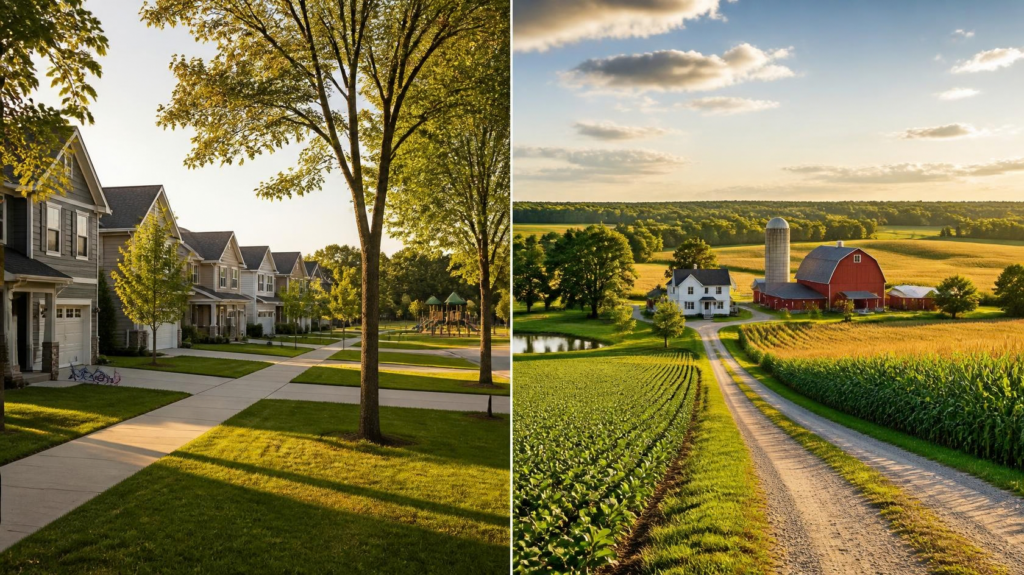
A lot of buyers I work with reach a point in their search where they stop comparing specific suburbs and start asking a bigger question. Do they actually want suburban life at all, or would they be happier further out, in a small town or on a piece of rural land where the pace and the scenery look completely different? It is a fair question, and the answer really comes down to what kind of daily life you are trying to build. Here is the direct answer. Suburban Minnesota gives you convenience, shorter commutes, established infrastructure, and a wide range of housing and school options packed into a relatively compact footprint. Rural Minnesota gives you space, privacy, lower density, and a slower pace of life, but it comes with longer drives for everyday errands and fewer nearby services. Neither one is objectively better. It is about which trade offs fit the life you actually want to live. Space and Privacy This is usually the first thing people notice when they compare the two. Suburban lots in the Twin Cities metro are typically modest, giving you a yard but not a lot of separation from your neighbors. Rural properties, whether that is a small acreage outside a small town or a larger parcel further from the metro, give you real space and privacy. If you want room for animals, a large garden, a workshop, or just distance between you and the next house, rural living delivers that in a way suburban lots generally cannot. Commute and Access to Jobs Suburban living puts you within a reasonable drive of the Twin Cities job market, and most established suburbs connect to major highways that keep commute times manageable. Rural living almost always means a longer commute if your job is in the metro, and for some buyers that trade off is worth it for the space and quiet. For others, especially those working downtown or in a specific suburban job corridor, the extra drive time adds up fast and becomes a daily source of frustration rather than a minor inconvenience. Everyday Conveniences Suburban areas are built around convenience. Grocery stores, pharmacies, restaurants, gyms, and medical care are usually a short drive away, sometimes even walkable depending on the neighborhood. Rural living requires more planning. A grocery run might mean a twenty or thirty minute drive to the nearest town, and specialty services like certain medical specialists or larger retail stores might require a trip into a regional hub or the metro itself. This is not a dealbreaker for everyone, but it is a real adjustment for buyers coming from a more urban or suburban lifestyle. Schools and Community Suburban school districts in the Twin Cities metro tend to be larger, with more programming options, more extracurriculars, and more resources simply because of scale. Rural school districts are often smaller, which some families see as a major benefit, since smaller class sizes and a tighter knit community can mean more individual attention and a stronger sense of belonging. Community in rural Minnesota also tends to center around smaller local institutions, church groups, county fairs, and small town events, while suburban community life is often built around larger civic organizations, sports leagues, and neighborhood associations. Cost Considerations Land itself is generally more affordable per acre in rural areas, which is part of why buyers looking for space or acreage often look outside the metro. That said, rural properties can come with their own costs, including well and septic maintenance, longer commute related expenses, and sometimes higher costs for services that have to travel further to reach you. Suburban homes typically come with higher land costs relative to lot size but lower ongoing costs tied to infrastructure like municipal water, sewer, and trash service that rural properties often have to handle independently. Pace of Life This is the piece that is hardest to quantify but often matters the most. Suburban life in Minnesota still moves at a noticeably faster pace than rural life, with more traffic, more scheduled activities, and more day to day stimulation. Rural life slows things down. Neighbors know each other, the seasons feel more present in daily routines, and there is generally less noise and less rush. Some people find that peace exactly what they are looking for. Others find it isolating, especially if they are used to having more going on nearby. Which One Fits You If convenience, shorter commutes, and access to a wide range of amenities and school options matter most to you, suburban Minnesota is almost certainly the better fit. If space, privacy, a slower pace, and a tighter knit small community matter more than proximity to everything, rural Minnesota deserves a serious look. Some buyers land in between, choosing an outer suburb or exurb that offers a bit of both, and that middle ground is worth considering if you cannot fully commit to either extreme. Frequently Asked Questions Is rural Minnesota cheaper than suburban Minnesota? Land per acre is generally more affordable in rural areas, but total cost depends heavily on the specific property, well and septic considerations, and commute related expenses, so it is worth comparing actual listings rather than assuming. How much longer is the commute from rural Minnesota to the Twin Cities? It varies significantly depending on exactly how far out you are looking, since rural Minnesota covers a huge range of distances from the metro. A property thirty minutes past the suburbs will have a very different commute than one an hour and a half out. Do rural properties in Minnesota use well and septic systems? Most rural properties outside municipal boundaries rely on private well water and septic systems rather than city water and sewer, which is an important factor to understand and budget for before buying. Are rural school districts in Minnesota smaller than suburban districts? Generally yes, rural districts tend to have smaller enrollment and class sizes compared to the larger suburban districts in the Twin Cities metro, though