
What Is It Like Living in Burnsville vs Apple Valley, Minnesota?
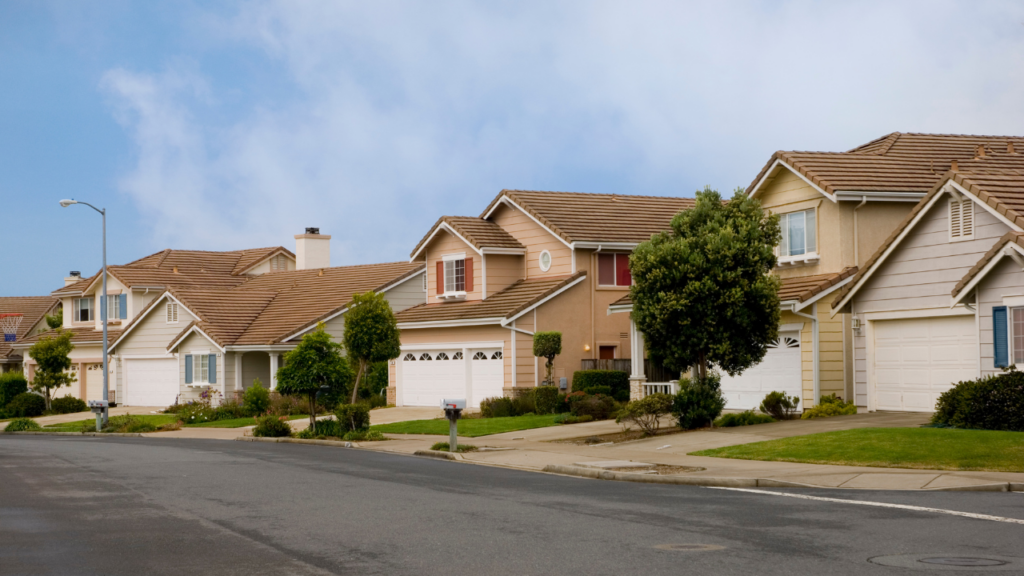
A family from Kansas City called me last spring with a situation I find genuinely common among buyers relocating to the Twin Cities without a strong prior connection to the metro. They had spent several evenings researching southern suburbs and had landed on two communities that kept appearing as strong choices in every comparison they found. Burnsville and Apple Valley. Both in Dakota County. Both with familiar suburban profiles. Both within their budget. Both close to each other on the map. Their frustration was specific and reasonable. “Everything we read about these two communities says almost exactly the same thing. Good schools. Family-friendly. Affordable. Great parks. We cannot figure out what is actually different about them and why we should choose one over the other.” The frustration is legitimate because most of what gets written about southern metro suburbs in the Twin Cities treats them as a relatively undifferentiated landscape of good suburban options. That characterization is not wrong exactly, but it is not useful to someone who needs to make a specific choice between two specific communities. Burnsville and Apple Valley are genuinely good neighbors. They share a school district, a general price range, and a southern metro position. But they are not the same community, and the differences between them are real and affect daily life in ways worth understanding before you choose. Here is what the comparison actually looks like when examined closely enough to be useful. The Geographic and Administrative Context Burnsville and Apple Valley sit side by side in Dakota County, with Burnsville to the northwest of Apple Valley and Apple Valley extending south and east toward Lakeville. Together with Eagan they form the core of the southern Dakota County suburban landscape. Burnsville is the older and slightly more urban-feeling of the two, with a 2024 population of approximately sixty-four thousand residents. It borders Eden Prairie and Savage to the west, Eagan to the east, and is bisected by Interstate 35W and Interstate 35E which split at the community’s northern edge. This highway geometry is one of the most practically significant characteristics of Burnsville because it means residents have two separate interstate connections depending on which part of the city they live in and which direction they are commuting. Apple Valley is positioned south of Eagan and east of Burnsville with a population of approximately fifty-six thousand. It borders Rosemount to the southeast and Lakeville to the south. Its primary highway connections are Cedar Avenue running north-south and County Road 42 running east-west as the primary commercial spine of the community. For buyers commuting to Minneapolis, both communities offer similar highway access via Interstate 35W and Interstate 35E. Burnsville’s slightly more northern position gives it a fractional commute advantage to the urban core. For buyers commuting to downtown Saint Paul, both are reasonable but neither is ideally positioned for that destination. Burnsville: What the Community Is Actually Like Burnsville is the older of the two communities and its age shows in ways that are both positive and less positive depending on what a buyer is looking for. The positive dimension of Burnsville’s age is that it has the established neighborhood character that comes from decades of development and habitation. The older neighborhoods of Burnsville, particularly those in the northern and central parts of the city, have mature tree canopy, established landscaping, and the kind of settled residential feel that takes time to develop and that newer suburbs cannot replicate. For buyers who value the established neighborhood character of a community that has been lived in and loved for fifty years, parts of Burnsville deliver this genuinely. The less positive dimension of Burnsville’s age is that a significant portion of its housing stock is from the 1960s through the 1980s, which means buyers are often looking at homes with original or aging mechanical systems and the maintenance requirements that accompany that era of construction. Furnaces, water heaters, electrical panels, and roofs on homes of this age are either at the end of their useful life or approaching it, and buyers should budget realistically for these costs. Burnsville’s commercial landscape has undergone significant change over the past two decades. The Heart of the City development along Nicollet Avenue was an attempt to create a more walkable town center environment for the community, and while it has not fully achieved the vision its planners had, it represents a genuine commercial and residential concentration that gives Burnsville a slightly more urban-feeling commercial center than Apple Valley’s more dispersed highway-corridor retail model. The Minnesota River runs along Burnsville’s western and northern boundary, creating access to the Minnesota River valley trail system that is one of the most distinctive natural amenities available to Burnsville residents. The Murphy-Hanrehan Park Reserve and the Black Dog Lake area provide additional natural amenity access that is genuinely distinctive for a community of Burnsville’s development intensity. Burnsville has historically had a slightly more diverse demographic profile than Apple Valley, reflecting its older development era and its position slightly closer to the urban core. This diversity is present in the commercial and restaurant landscape, where Burnsville offers somewhat more variety in ethnic dining options than the more uniformly suburban Apple Valley commercial environment. The one genuine challenge that Burnsville has faced over the past decade or two is a perception issue that is worth naming honestly. Some sections of Burnsville, particularly in the northern and central portions of the city along County Road 42 and the commercial corridors, have experienced commercial disinvestment and a perception of decline that affects how buyers view the community overall even though many of the residential neighborhoods are perfectly well-maintained and comfortable. This perception does not reflect uniformly on all of Burnsville but is a real factor in how the community is positioned in the broader metro conversation. Apple Valley: What the Community Is Actually Like Apple Valley is a somewhat younger and more uniformly suburban community that has a cleaner, more consistently maintained character than Burnsville across most of its