
What Staging Mistakes Should Sellers Avoid in Minnesota?
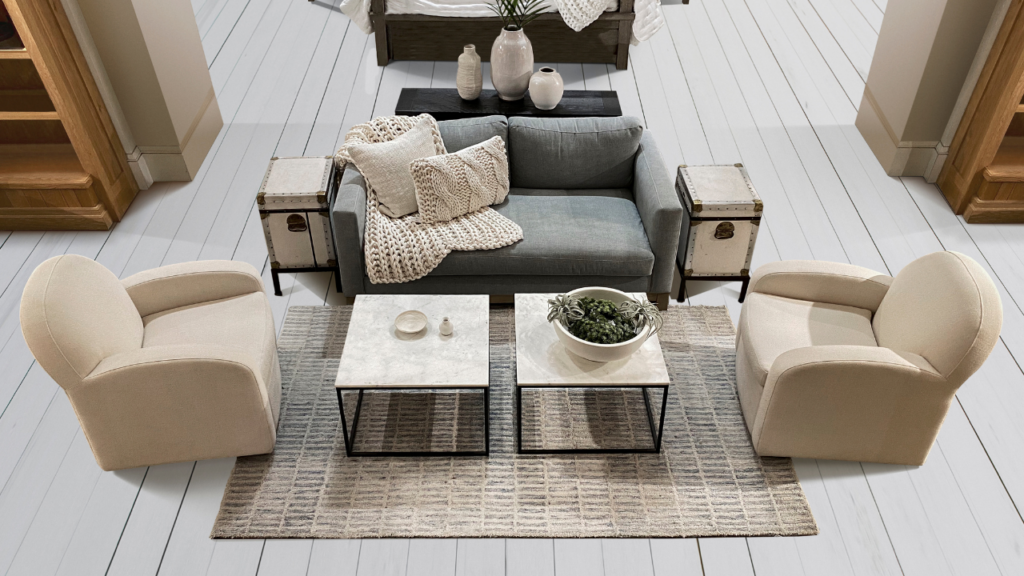
What Staging Mistakes Should Sellers Avoid in Minnesota? A seller called me three days after his listing had gone live in Roseville with a question that contained more frustration than he probably intended to show. He had listed the home at a price his Realtor had supported. The photos had been taken professionally. The marketing was in place. But the showing requests were coming in at a slower pace than he had hoped, and the two buyers who had toured had given feedback that felt vague and noncommittal. One piece of feedback stood out. An agent who had shown the home had written a single line in the feedback form that had been bothering him for two days. The feedback said the home felt small. He called me because he had seen my content and wanted another perspective. He described the layout of his home, which was a nineteen-nineties Colonial with a generous floor plan that should not read as small under any reasonable interpretation. The rooms were not small. The home was not small. Something in how the home was presented was creating an impression that did not reflect the reality of the space. After a thirty-minute conversation about how each room was furnished and arranged, the problem was clear. Every staging decision he had made was producing the opposite effect from what he intended, and the cumulative impact was a home that felt cramped, dark, and smaller than its actual dimensions. Staging mistakes are not always obvious to the person making them. They feel like reasonable choices in the context of someone who has been living in the home and who has habituated to the space as it is. From the outside, from the buyer’s perspective, they create impressions that undermine the home’s presentation in specific and consistently identifiable ways. Here is the complete guide to the staging mistakes sellers make most frequently and how to avoid every one of them. Mistake One: Furniture That Is Too Large for the Space This was the primary issue in the Roseville home and it is the staging mistake I encounter most frequently when a home is reading as smaller than it actually is. Oversized furniture is an extremely common staging problem in homes that have been lived in for several years, because the furniture that was purchased for a previous home or for a different purpose gradually fills spaces without anyone consciously noticing that the scale has become wrong. A sectional sofa that works functionally in a family room but that occupies sixty percent of the floor space creates a room that reads as having barely enough floor space for the furniture rather than a room with generous space that happens to have furniture in it. A king bed in a bedroom that is twelve feet wide leaves so little clearance on each side that the room feels like a corridor on either side of the mattress. A dining table that can seat ten in a dining room that comfortably seats six makes every meal feel crowded and makes buyers wonder whether their furniture would actually fit. The rule of thumb for staging furniture is that buyers should be able to comfortably imagine the room without the current furniture rather than immediately recognizing that the current furniture is too big. If the dominant impression of a furnished room is the furniture rather than the room, the furniture is too large. Removing or temporarily storing oversized pieces and replacing them with appropriately scaled alternatives, even if that means the room is furnished more simply than usual, almost always improves the impression of the space. Mistake Two: Too Much Furniture in the Room Distinct from the problem of oversized furniture is the problem of simply too many pieces in the room, regardless of the size of each individual piece. A living room that has a sofa, a loveseat, two accent chairs, three side tables, a coffee table, a console behind the sofa, a bookcase, a desk in the corner, an entertainment center, a standing lamp, and two table lamps has too much furniture in it regardless of the size of each individual piece. The cumulative effect is a room that has no breathing room, no clear sight lines, and no sense of spaciousness. The editing principle for room furniture during a listing is to keep what is needed to define the purpose and comfort of the space and remove everything else. A living room needs a sofa, a coffee table, one or two chairs, and a side table or two. A bedroom needs a bed, two nightstands, and perhaps a dresser. A dining room needs the table, the chairs, and nothing else in most cases. Items removed from rooms for the listing period can go into a storage unit, into the garage, or into a storage room in the home. The goal is not to permanently part with them. The goal is to present the rooms in their most spacious, defined, and functional form during the specific period when the home is being shown to buyers. Mistake Three: Furniture Pushed Against Walls This is one of the counterintuitive staging mistakes because the instinct to push furniture against walls feels like it should create more open space in the center of the room. In practice, it does the opposite. Furniture arranged against walls creates a room where the center is empty and the perimeter is occupied, which makes the room feel like a waiting room rather than a living space. It also makes the proportional relationship between the furniture and the room look wrong, because when furniture is against walls the scale of the furniture relative to the room becomes exaggerated rather than harmonious. Professional staging practice consistently pulls furniture away from walls to create a conversational grouping in the center of the space. A sofa and two chairs arranged around a coffee table in the center of the room, with space between the back of the sofa and the wall behind