
What Is It Like Living in the Outer Twin Cities Suburbs in Minnesota?
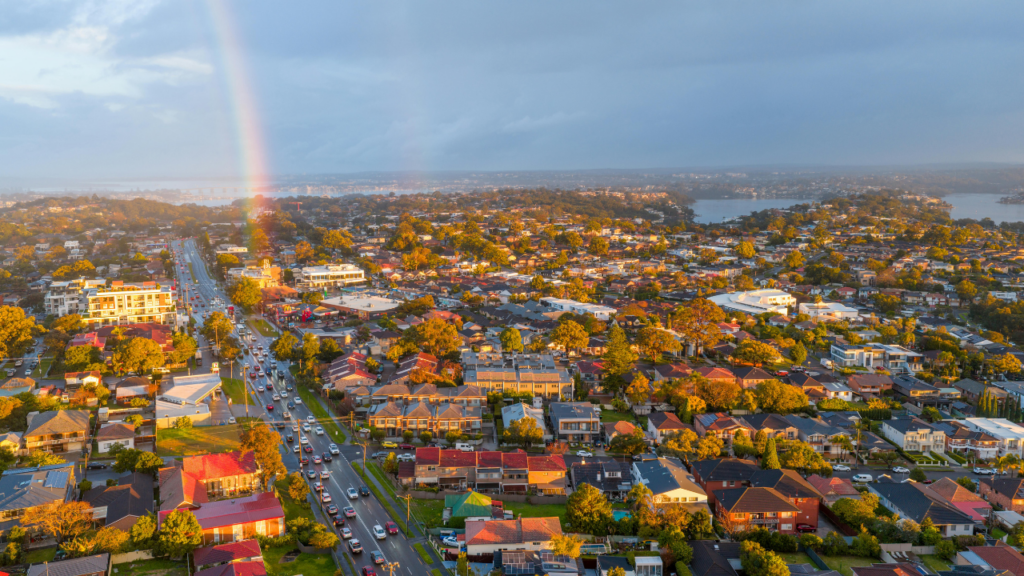
A family called me from Phoenix last February with a housing budget that surprised me a little given what they were hoping to buy. Their budget was four hundred thousand dollars. They had three children. They wanted a four-bedroom home with a three-car garage, a large yard, and a community with strong schools. They were both working remotely, which meant commute was not a constraint. And they had done enough research on the Twin Cities metro to understand that their budget would not buy what they were describing in Eden Prairie, Plymouth, or Minnetonka. “Someone in a Facebook group told us to look at the outer suburbs,” the husband said. “But honestly we have no idea what that means or what life is like out there. Are these communities people actually choose or are they just where people end up when they cannot afford the inner suburbs?” That question, asked without the pretense of already knowing the answer, gets at something genuinely important about how the outer Twin Cities suburbs are perceived versus what they actually are. The outer suburbs are not where people end up. For a specific and growing category of buyer, they are exactly where people choose to be. And understanding why requires understanding what these communities actually deliver, what they require in exchange, and who they fit best. Here is the complete picture of what life in the outer Twin Cities suburbs is actually like. What the Outer Suburbs Actually Are The outer Twin Cities suburbs are the communities that sit at the metropolitan fringe, beyond the continuous development band of the established middle-ring suburbs and into the territory where residential development is still actively expanding into formerly agricultural or undeveloped land. These communities include Lakeville and Farmington to the south, Lino Lakes and Forest Lake to the north, Elk River and Rogers to the northwest, Waconia and Victoria to the west, and communities like Cottage Grove, Hastings, and Prescott on the eastern and southeastern fringe. They also include communities like Prior Lake, Savage, and Shakopee which have grown substantially and now represent significant suburban communities in their own right despite their position at the outer edge of the contiguous metro. What distinguishes outer suburbs from middle-ring suburbs is not simply distance from downtown Minneapolis or Saint Paul, though distance is part of it. It is the combination of lower housing costs, more recently developed or actively developing housing stock, more open space and land availability, less established community infrastructure in many cases, and longer commutes to the employment and cultural centers of the metro. For fully remote workers like the family from Phoenix, many of these distinguishing characteristics are either advantages or neutral factors rather than trade-offs. The commute distance does not affect them. The lower housing cost buys them a significantly larger and newer home. The open space is part of what attracted them. And the developing community infrastructure, while less established than inner suburbs, is sufficient for daily life in most outer suburban communities. What Outer Suburban Living Actually Delivers The most immediately compelling advantage of outer suburban living is what your housing budget buys. The gap in purchasing power between the outer suburbs and the established inner and middle suburbs is not marginal. It is transformative. A family who can buy a modest three-bedroom home in Eden Prairie or Plymouth at four hundred thousand dollars can often find a four or five-bedroom home with a larger lot, a three-car garage, and newer construction in Lakeville, Elk River, or Prior Lake at the same price point. That is not a small difference in practical daily living space. It is a fundamentally different version of home ownership. For families with multiple children who need bedrooms, for households with work-from-home setups that require dedicated office space, and for buyers who specifically want the space for a workshop, a home gym, or the particular kind of generous indoor and outdoor living that the American suburban home aspiration is built around, the outer suburbs deliver what many inner suburbs can only approximate at the outer reaches of most buyers’ budgets. The housing stock is newer on average than in the established suburbs, which is a meaningful practical advantage that is easy to overlook in the excitement of comparing price points. A home built in 2015 in Lakeville or Rogers has newer mechanical systems, more modern construction standards, and likely fewer immediate capital expenditure needs than a comparable home built in 1985 in Plymouth or Burnsville. The cost of homeownership over the first ten years is genuinely different between a newer outer suburban home and an older established suburban home at the same purchase price. The community growth energy is a distinctive characteristic of outer suburban life that residents either love or find unsettling. Communities that are actively building, that are adding schools, parks, trails, and commercial infrastructure as their population grows, have a particular energy of becoming that established communities do not have. New neighbors move in regularly. New families are forming community at the same time rather than joining an existing community that has long-established social networks. The social playing field is more level in new communities where everyone is relatively new. For families with children who are starting in a community at the same time as many of their neighbors’ children, this cohort effect can be genuinely wonderful. The class of kindergarteners entering the new elementary school in a growing outer suburb is full of children who are all new, all building friendships simultaneously, and whose parents are all forming community at the same time. The social energy of a growing community is different from the social energy of joining an established one. The land and nature access in outer suburban communities is often genuinely better than what established inner suburbs can offer because these communities have more undeveloped and recently developed land adjacent to their residential areas and because the regional park and open space infrastructure in the outer metro tends to be