
What Is It Like Living in the Outer Twin Cities Suburbs?
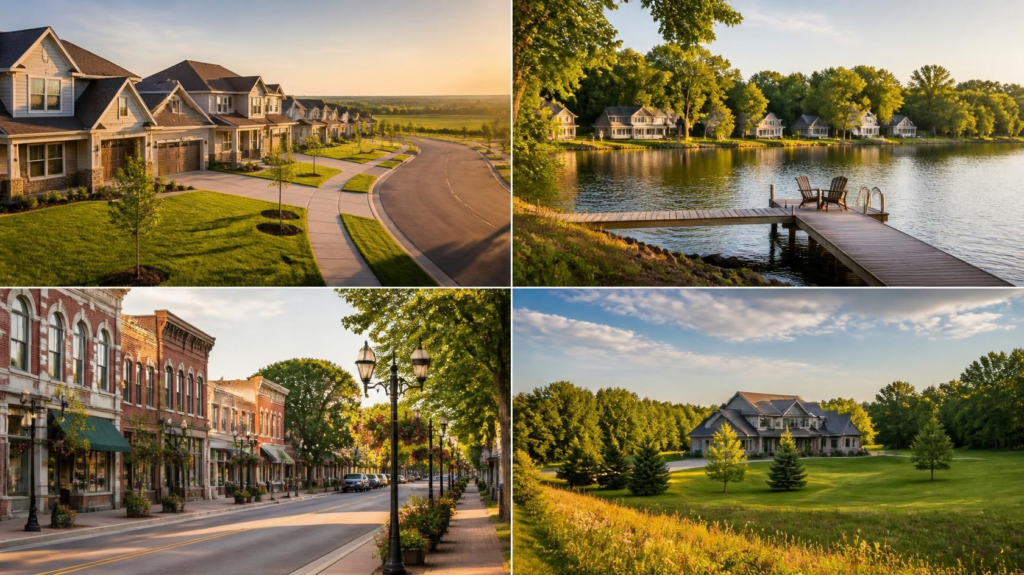
When buyers get priced out of the closer in suburbs, or simply want more space and a lower price point, the outer ring of the Twin Cities metro usually enters the conversation. Cities like Rogers, Otsego, Elk River, Prior Lake, Farmington, Hugo, and similar communities sit further from the urban core, and living there is a genuinely different experience than living in a well established inner ring suburb. Here is the direct answer. Outer suburbs generally give you more space, newer housing stock, and a lower cost per square foot than the closer in suburbs, but you trade that for a longer commute, fewer nearby amenities, and communities that are often still growing and developing their infrastructure. For a lot of buyers, especially those working remotely or willing to accept a longer drive in exchange for more house and more land, that trade is well worth it. Space and Newer Construction The outer suburbs are where most of the metro’s new construction is happening. Because land is more available and less expensive further from the urban core, builders have room to develop larger subdivisions with bigger lots and newer floor plans. If you want a brand new home, a larger yard, or simply more square footage for your budget, the outer suburbs are usually where you will find it. This is a meaningful advantage for growing families or buyers who prioritize space over proximity. Commute Considerations This is the honest trade off. Outer suburbs sit further from downtown Minneapolis and Saint Paul, and depending on which direction you are looking, that can mean a commute of forty five minutes to well over an hour during peak traffic. Some outer suburbs have better highway access than others, so it is worth researching the specific commute from any home you are considering rather than assuming distance on a map translates directly to drive time. If your job allows remote or hybrid work, the commute trade off becomes much easier to accept. Amenities and Development Because many outer suburbs are still growing, the retail, dining, and service infrastructure is often less developed than what you would find in an established inner or middle ring suburb. That is changing quickly in a lot of these communities, with new shopping centers, restaurants, and services opening as the population grows, but it is fair to expect fewer immediate options and more reliance on driving to a neighboring city or the metro for certain needs, at least for now. Schools School quality in the outer suburbs varies by district, and because many of these communities are growing rapidly, school districts are often expanding too, sometimes building new schools to keep pace with enrollment. This can be a genuine positive, since newer schools and growing districts sometimes bring updated facilities and fresh investment, but it is worth researching the specific district serving any home you are considering, since capacity and resources can vary significantly from one outer suburb to the next. Community Feel Outer suburbs often carry more of a small town or semi rural feel than the more built out inner suburbs, even though they are technically part of the broader metro area. Many were originally small towns that have grown as the metro expanded outward, and that history often shows up in a more community centered, slower paced atmosphere compared to the denser, more urban feeling inner suburbs. Cost and Value Generally speaking, the further you get from the urban core, the more house you can get for your budget, since land and construction costs tend to be lower further out. This is one of the biggest draws for buyers looking at the outer suburbs, particularly those who need more space than their budget would allow closer in. That said, cost varies significantly by specific community and property, so it is worth comparing actual listings rather than relying on general assumptions about any one area. Who the Outer Suburbs Fit Best The outer suburbs tend to work best for buyers who prioritize space, newer construction, and value over proximity to the urban core, and who either have flexibility in their commute or work remotely at least part of the week. They also appeal to buyers who want a quieter, more small town feeling community while still technically being part of the greater Twin Cities metro area. Frequently Asked Questions What counts as an outer Twin Cities suburb? Generally, communities further from the urban core than the well established inner and middle ring suburbs, such as Rogers, Otsego, Elk River, Prior Lake, Farmington, and Hugo, though the exact boundary is somewhat subjective and depends on which direction of the metro you are looking at. Is it worth the longer commute to live in an outer suburb? That depends entirely on your job flexibility and how much you value space and cost savings versus proximity. Many buyers with remote or hybrid work arrangements find the trade off well worth it. Do outer suburbs have good schools? School quality varies by specific district, and many outer suburb districts are growing and investing in new facilities to keep pace with population growth. It is worth researching the specific district for any home you are considering. Are outer suburb homes newer than inner suburb homes? Generally yes, since most current new construction in the metro is happening in the outer suburbs where land is more available. Will amenities improve in the outer suburbs over time? Many outer suburbs are actively developing new retail, dining, and service infrastructure as their populations grow, so amenities in these areas often continue to expand over time. Is it cheaper to buy a home in the outer suburbs? Generally, home prices and cost per square foot tend to be lower the further you get from the urban core, though this varies by specific community and property, so comparing actual listings is the best way to know for sure. If you are considering the outer suburbs and want to understand exactly what trade offs make sense
What Is It Like Living in Plymouth vs Minnetonka?
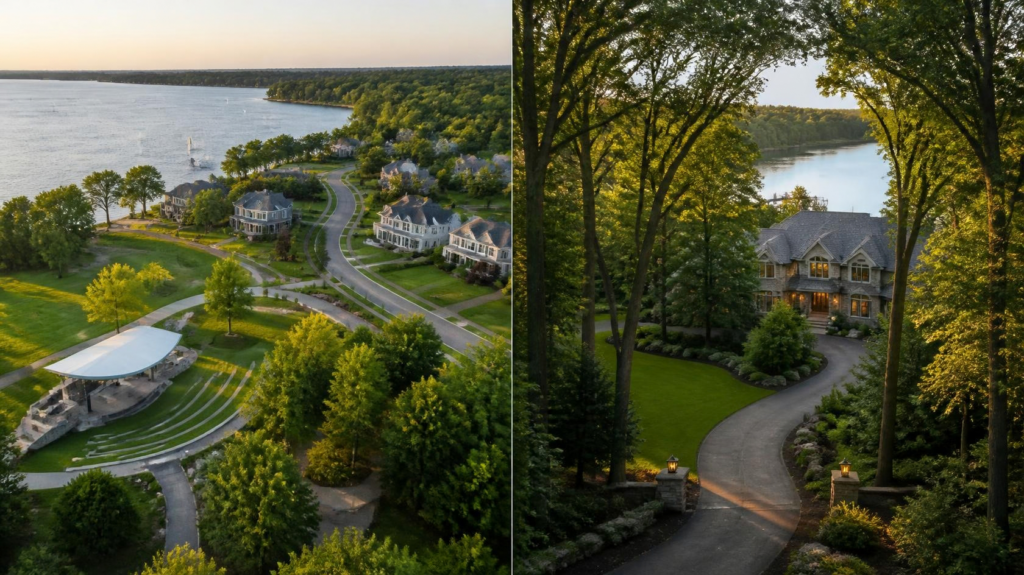
Plymouth and Minnetonka are two of the most established, highly regarded suburbs in the west metro, and buyers weighing one against the other are usually choosing between two genuinely excellent options rather than looking for a reason to rule one out. So let’s talk about what actually separates them. The short answer is this. Plymouth is Minnesota’s largest suburb by land area and population among the western suburbs, with a mix of newer development, extensive parkland, and a layout built around convenience and space. Minnetonka is older and more established, anchored by Lake Minnetonka’s eastern edge, with a stronger concentration of mature neighborhoods, higher end retail, and some of the most desirable lake adjacent real estate in the west metro. Both offer excellent schools and strong access to job centers, but the feel of each city is genuinely different once you get past the highway exit. Size, Layout, and Growth Plymouth is a large, spread out city that has grown steadily for decades, and that growth shows up in a wide range of housing options, from established neighborhoods built in the 1980s and 1990s to newer developments still being built on the city’s edges. Minnetonka is more built out and mature, with less new construction available and a housing stock that reflects decades of steady, high quality development rather than ongoing expansion. If you want more options in new construction, Plymouth tends to offer more of that. If you want an established neighborhood with mature trees and a settled feel, Minnetonka delivers that more consistently. Lake Access This is one of the clearest differentiators. Minnetonka takes its name from Lake Minnetonka, one of the most well known lakes in the state, and a meaningful portion of the city touches its shoreline or sits close enough to enjoy easy lake access. That proximity drives up demand and price for lake adjacent homes, but it also means boating, swimming, and lake life are genuinely part of everyday living for many Minnetonka residents. Plymouth has its own lakes, including Medicine Lake and Parkers Lake, and a strong network of parks and trails, but it does not carry the same singular lake identity that Minnetonka has built around Lake Minnetonka. Parks and Trails Plymouth has invested heavily in its parks and trail system, and it shows. The city maintains an extensive network of paved trails connecting neighborhoods, parks, and commercial areas, along with large community parks like Parkers Lake Park and the Luce Line Regional Trail corridor. Minnetonka also offers strong park access, with Lone Lake Park and connections to the Minnesota River Bluffs LRT Regional Trail, but the overall footprint is smaller given the city’s more compact, built out layout. Retail and Dining Minnetonka is home to Ridgedale Center, one of the more established retail hubs in the west metro, along with a strong corridor of dining and shopping along Highway 7 and Interstate 394. Plymouth has its own significant retail presence, particularly around the Plymouth Marketplace and West Medicine Lake corridor, but Minnetonka’s proximity to Ridgedale gives it a slight edge in terms of concentrated retail variety close to home. Schools Plymouth is served primarily by Wayzata Public Schools along with portions covered by Robbinsdale and Osseo school districts, depending on the specific neighborhood. Minnetonka is served primarily by Minnetonka Public Schools, one of the most consistently well regarded districts in the state, along with some areas covered by Hopkins and Wayzata districts. Both cities offer strong educational options, but because school boundaries can vary block by block, it is worth confirming exactly which district and school a specific home falls into before you commit. Commute and Access Both cities offer strong highway access. Plymouth connects through Highway 55, Interstate 494, and Interstate 94, giving residents flexible routes into Minneapolis or the northwest metro. Minnetonka sits along Interstate 394 and Highway 7, both of which feed directly into downtown Minneapolis, making it one of the more convenient commuting suburbs for anyone working downtown or in the southwest job corridor. Which One Fits You If lake living is a priority and you want an established, mature neighborhood close to some of the best retail in the west metro, Minnetonka is worth prioritizing. If you want more options in newer construction, a larger selection of neighborhoods across a bigger footprint, and a strong parks and trail system without the lake premium, Plymouth tends to be the better fit. Both are excellent choices, and the right one really depends on whether lake access and established character matter more to you than space and newer housing options. Frequently Asked Questions Does Plymouth have lake access? Yes, Plymouth has several lakes including Medicine Lake and Parkers Lake, though it does not have the same single, well known lake identity that Minnetonka has with Lake Minnetonka. Which city has more new construction available? Plymouth generally offers more new construction, since the city has continued expanding on its edges, while Minnetonka is more built out and established. Are Plymouth and Minnetonka in the same school district? No. Plymouth is served primarily by Wayzata Public Schools with some Robbinsdale and Osseo coverage, while Minnetonka is served primarily by Minnetonka Public Schools with some Hopkins and Wayzata coverage. It is worth confirming the exact boundary for any specific home. Which city has a shorter commute to downtown Minneapolis? Minnetonka’s access to Interstate 394 tends to offer a more direct route into downtown Minneapolis, though both cities offer workable commutes depending on your exact destination. Is Minnetonka more expensive than Plymouth? Home values vary widely by neighborhood in both cities, and lake proximity in Minnetonka can drive up prices for specific properties. Rather than relying on general assumptions, it is best to compare specific neighborhoods and current listings directly. What is Minnetonka best known for? Minnetonka is best known for its proximity to Lake Minnetonka, its established neighborhoods, and Ridgedale Center as a major retail hub. If you are weighing Plymouth against Minnetonka, let’s talk through what matters most to you,
What Is It Like Living in Chaska vs Chanhassen?
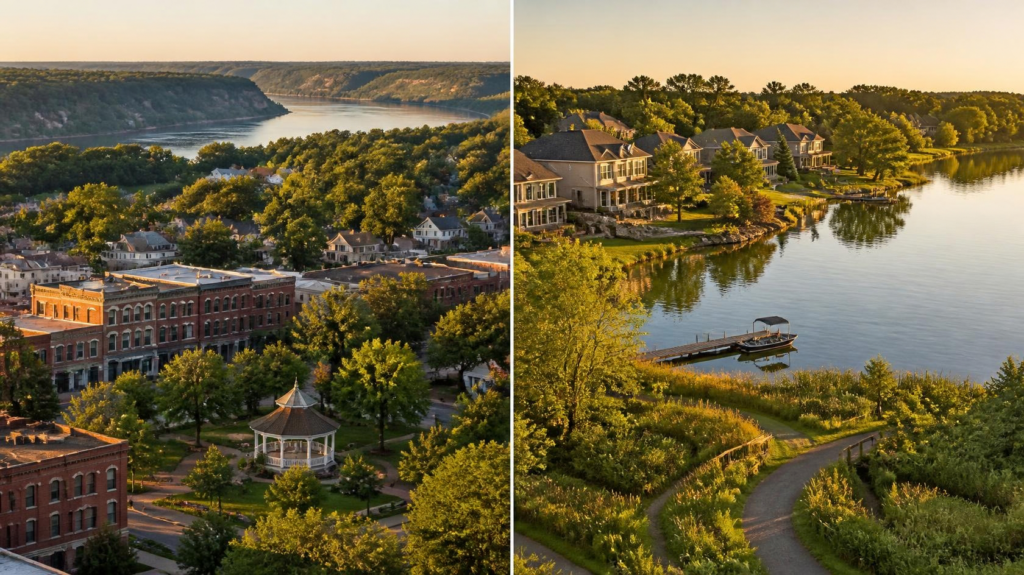
Chaska and Chanhassen sit side by side in the southwest metro, and buyers cross shop them constantly because they share a border, a general price range, and a lot of the same convenience. But they are not the same city, and once you spend a little time in each one, the differences start to matter. Here is the direct answer. Chanhassen tends to feel a bit more polished and amenity rich, known for the Chanhassen Dinner Theatres, the Minnesota Landscape Arboretum, and a strong retail presence along Highway 5. Chaska has a more historic, small town downtown built around its original riverside core, with a slightly more laid back and community focused feel. Both offer excellent schools, strong parks systems, and easy access to Highway 212, but the character of daily life is genuinely different between the two. Downtown and Character Chaska’s downtown is one of the more charming historic cores in the southwest suburbs. It sits along the Minnesota River and still carries the feel of a river town, with older brick buildings, local shops, and a walkable main street that has been preserved rather than redeveloped into something generic. Chanhassen, by comparison, has grown around a more modern commercial corridor. You will find newer retail centers, a wider range of dining options along Highway 5, and a downtown area that feels more contemporary and planned than organically historic. Arts, Culture, and Entertainment Chanhassen is home to the Chanhassen Dinner Theatres, one of the largest professional theater complexes in the country, which gives the city a cultural draw that pulls visitors from across the metro. It is also home to the Minnesota Landscape Arboretum, a genuine destination for anyone who loves gardens, trails, and seasonal displays. Chaska does not have quite the same headline attractions, but it makes up for it with a strong community events calendar, a well regarded community center, and a golf course, the Chaska Town Course, that is well known among local golfers. Parks and Outdoor Space Both cities take their parks seriously. Chaska has extensive trail connections along the Minnesota River and a large network of neighborhood parks, plus Lake Bavaria and Lake Hazeltine giving residents lake access without leaving city limits. Chanhassen has Lake Minnewashta and Lake Ann, both popular for swimming, boating, and picnicking, along with a well developed trail system that connects neighborhoods to its parks and to the Arboretum. Schools Chaska and Chanhassen are both served primarily by Eastern Carver County Schools, District 112, which means families comparing the two cities are often comparing the same school system rather than different ones. That takes one major variable off the table and lets you focus on neighborhood, commute, and lifestyle instead. Commute and Access Both cities connect to the rest of the metro through Highway 212 and Highway 5, giving residents a workable commute into Minneapolis, Eden Prairie, or the broader southwest metro job corridor. Chanhassen sits slightly closer to Highway 494 and the Eden Prairie job center, while Chaska sits a bit further southwest, which can add a few minutes depending on your exact destination. Neither commute is unreasonable, but if you work specifically in the Eden Prairie or Bloomington corridor, Chanhassen may shave a little time off your drive. Housing Stock Chaska offers a mix of historic homes near its downtown core alongside newer developments on the edges of the city, giving buyers a wider range of architectural style and price point to choose from. Chanhassen’s housing tends to be more uniformly newer and suburban in character, with larger lots and a housing stock built mostly from the 1980s onward. If you are drawn to character and older architecture, Chaska has more of that to offer. If you want a more consistent, modern suburban feel, Chanhassen tends to deliver that more reliably. Which One Fits You If you want a small town feel with a historic downtown, river access, and a slightly quieter pace, Chaska is worth prioritizing. If you want more retail and dining options close to home, access to the Arboretum and the Dinner Theatres, and a more contemporary suburban feel, Chanhassen tends to be the better match. Both give you strong schools and a genuinely pleasant place to raise a family or settle into, so this comparison usually comes down to personal taste rather than any clear winner. Frequently Asked Questions Are Chaska and Chanhassen in the same school district? Yes, both cities are served primarily by Eastern Carver County Schools, District 112. Which city has a shorter commute to Minneapolis? Both are comparable, though Chanhassen sits slightly closer to the Eden Prairie and 494 corridor, which can shave a little time off commutes to that part of the metro. Does Chaska have lake access? Yes, Chaska has Lake Bavaria and Lake Hazeltine within city limits, along with trail access along the Minnesota River. What is Chanhassen best known for? Chanhassen is best known for the Chanhassen Dinner Theatres and its proximity to the Minnesota Landscape Arboretum, along with Lake Minnewashta and Lake Ann. Is Chaska’s downtown walkable? Yes, Chaska has one of the more walkable historic downtown cores in the southwest metro, built along the Minnesota River. Which city has newer housing on average? Chanhassen’s housing stock skews newer and more uniformly suburban, while Chaska offers a wider mix of historic and newer homes. If you are weighing Chaska against Chanhassen, I would love to show you both in person. Reach out and we can tour neighborhoods in each city so you can see the differences for yourself.
What Is It Like Living in Burnsville vs Apple Valley?
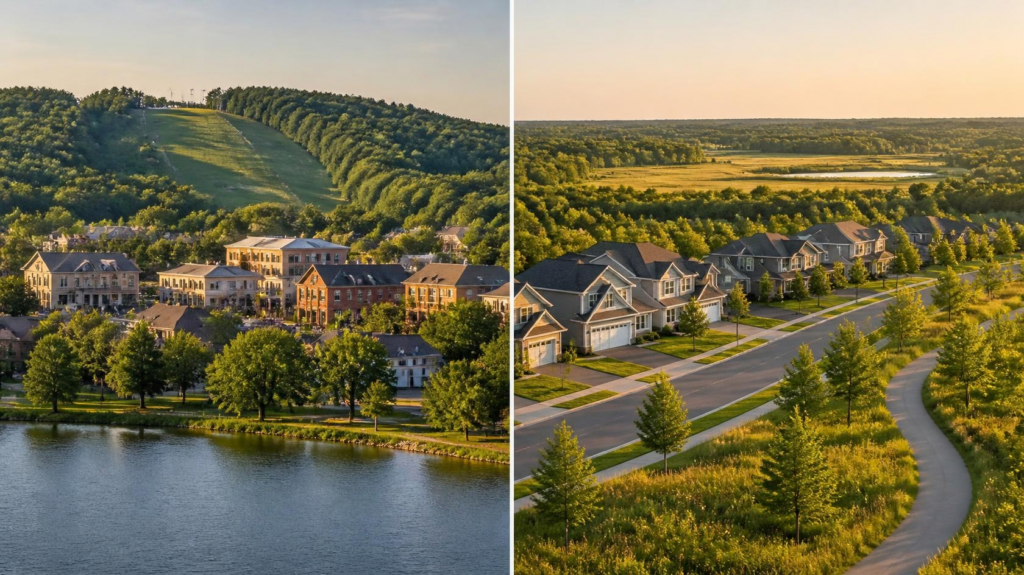
So you have narrowed your search down to Burnsville and Apple Valley, and now you are stuck comparing two suburbs that sit right next to each other on the map but somehow feel different once you actually spend time in them. That is a good problem to have, and it is one I help buyers work through all the time. Here is the quick answer. Burnsville tends to feel a little more established and commercial, with a stronger retail and dining core built up over the decades, while Apple Valley leans slightly more residential and family oriented, with a reputation for its zoo and its newer housing stock in certain pockets. Both sit in District 196 for the majority of their neighborhoods, both offer quick access to 35E and Cedar Avenue, and both give you a genuinely easy commute into Minneapolis or Saint Paul. The differences come down to pace, layout, and the specific pocket of each city you land in. What Burnsville Offers Burnsville is one of the older, more developed suburbs south of the river, and you feel that the moment you drive through it. The Burnsville Center area anchors a large retail and dining corridor, so you are never far from a grocery store, a restaurant, or a place to run errands without getting on the freeway. Neighborhoods range from smaller starter homes built decades ago to newer construction near the bluffs overlooking the Minnesota River, and that river valley gives parts of Burnsville some genuinely striking views and access to trails you would not expect this close to a commercial hub. Burnsville also has a well used network of parks, an aquatic center, and a performing arts center that gives the city a bit more cultural programming than some of its neighbors. What Apple Valley Offers Apple Valley has built its identity around family life and outdoor space. The Minnesota Zoo is the most obvious landmark, but the city also has an extensive trail system, several large community parks, and a downtown area centered around the Apple Valley Transit Station that has been developed with walkability in mind. Housing in Apple Valley tends to skew toward single family homes on larger lots compared to some of the denser pockets of Burnsville, and a number of neighborhoods were built in waves from the 1980s through the 2000s, so you will find a fairly consistent suburban housing style throughout much of the city. Commute and Access Both cities give you strong highway access. Burnsville sits right along 35W and 35E, which makes a downtown Minneapolis commute straightforward most days. Apple Valley relies more on Cedar Avenue, which has dedicated transit lanes and connects into the METRO Red Line bus rapid transit system, giving Apple Valley residents a rare suburban option for using transit to get into the city instead of driving every day. If a car free or car light commute matters to you, that Red Line access is worth weighing seriously. Schools Most of Burnsville and Apple Valley fall within Independent School District 196, one of the larger districts in the state, so families moving between these two cities often do not even have to worry about switching school systems. A smaller portion of Burnsville falls into the Burnsville-Eagan-Savage district instead, so it is worth confirming which specific school boundary a home falls into before you fall in love with it. Everyday Life and Amenities Burnsville gives you more of a built out commercial feel day to day, with shopping, dining, and services concentrated and easy to reach. Apple Valley feels a little quieter and more residential once you get off the main corridors, with the zoo, the parks, and the trail system doing a lot of the heavy lifting for entertainment and weekend activity. Neither city is going to feel remote or underserved. This is really a question of whether you want more retail energy close to home or more green space and a quieter residential feel. Home Prices and Housing Stock Both cities offer a range of housing types, from smaller ramblers and split levels built decades ago to newer two story homes in the outer edges of each city. Rather than quote specific price figures that shift with the market, the more useful comparison is housing age and style. Burnsville has a wider mix of older and newer construction because it developed earlier, while Apple Valley’s housing stock is generally a bit more uniform in age within any given neighborhood because larger sections were built out in single waves. Which One Fits You If you want to be closer to retail, dining, and a slightly more urban feeling suburb with river valley views in parts of the city, Burnsville is worth a serious look. If you want more green space, a stronger sense of quiet residential neighborhoods, and the option to use transit for your commute, Apple Valley tends to be the better fit. Plenty of buyers end up cross shopping both because they border each other and share so much infrastructure, and that is honestly the smart way to approach it. Frequently Asked Questions Are Burnsville and Apple Valley in the same school district? Most of both cities fall within Independent School District 196, though a portion of Burnsville is served by the Burnsville-Eagan-Savage district, so it is worth confirming the exact boundary for any specific home. Which city has a shorter commute to Minneapolis? Both are comparable in drive time thanks to 35W, 35E, and Cedar Avenue. Apple Valley has the added option of the METRO Red Line bus rapid transit for a non driving commute. Is Apple Valley more family friendly than Burnsville? Apple Valley has built more of its identity around family amenities like the zoo and its trail system, but Burnsville has plenty of family neighborhoods too. Both work well for families, and the right fit depends on the specific neighborhood. Does Burnsville have more shopping and dining than Apple Valley? Burnsville’s retail core around Burnsville Center is