
What Is It Like Living in a Quiet Neighborhood in Minnesota?
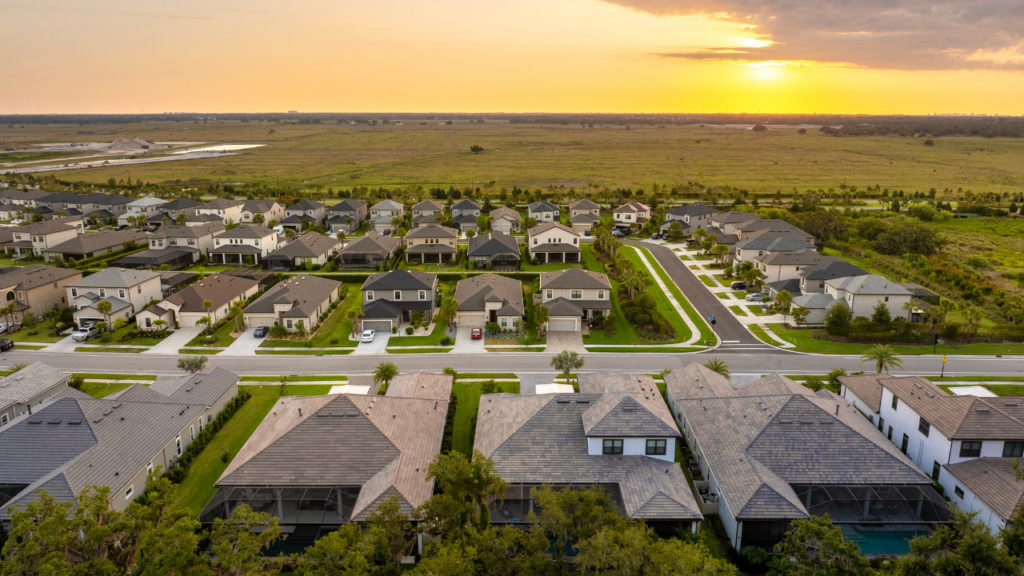
A buyer called me from his apartment in Dinkytown on a Thursday evening with a question that had been building for a while and that he finally felt ready to ask directly. He had been living in a high-density urban apartment for three years. He was thirty-one years old, worked remotely as a software developer, and had spent the first two years of his urban living genuinely enjoying the energy and proximity that came with his location. The third year had been different. The noise, the street activity, the background hum of urban density that he had found stimulating in year one had gradually become the primary source of friction in his daily life. The upstairs neighbor. The bar two doors down. The delivery trucks on the street before six in the morning. The ambient never-quite-silence of a dense urban block. He had started searching for a home and had told his search tool to filter for detached single-family homes in quiet residential neighborhoods. But he was running into a problem. “Quiet is not a search criterion that Zillow has a filter for,” he told me, and I could hear the mild exasperation of someone who had been trying to operationalize a concept that resists easy categorization. “And when I look at neighborhoods and try to evaluate them online I honestly cannot tell which ones are actually quiet and which ones just have nice photos. What makes a neighborhood actually quiet in Minnesota? And is this something I can evaluate before I buy?” His questions were both specific and practically answerable, and helping him understand the concept of neighborhood quiet in concrete terms, what produces it, what undermines it, and how to evaluate it before committing, was genuinely useful work. Here is the complete picture. What Neighborhood Quiet Actually Means Quiet, in the residential context, is not the absence of all sound. It is the absence of intrusive, involuntary, and relentless sound that competes with the life happening inside and immediately around your home. A quiet neighborhood has ambient sound that is either natural, the wind in trees, birdsong, rain on the roof, or residential in the way that belongs to the shared life of neighbors living nearby, lawn mowers on Saturday morning, children playing in the early evening, occasional cars passing on the residential street. These sounds are not absence of sound. They are the particular acoustic environment of a low-density residential neighborhood that most people who seek quiet are actually looking for. What quiet neighborhoods do not have is the sound profile of density and commercial activity. The bass from the bar two blocks away. The accelerating motorcycles on the arterial street. The delivery trucks making early morning runs. The ongoing conversation of people on the sidewalk outside the apartment building at midnight. The HVAC equipment from the commercial building across the street. These sounds are not merely annoying. They are incompatible with certain types of rest, concentration, and the particular psychological restoration that comes from having a genuinely quiet home environment. Understanding this distinction between the acoustic texture of low-density residential life and the acoustic intrusion of urban density and commercial activity is the foundation for thinking clearly about what quiet neighborhoods actually are. The Primary Factors That Produce Neighborhood Quiet in Minnesota Several specific physical and land-use characteristics reliably produce quieter neighborhood environments, and understanding them allows buyers to evaluate neighborhoods for quiet more accurately than relying on general impressions. Distance from major roads and arterial streets is the single most significant factor in neighborhood ambient noise level. Minnesota’s suburban street network organizes traffic on a hierarchy from local residential streets through collectors through arterials through highways. Homes on local residential streets, which are designed for access to residential properties rather than for through traffic, carry dramatically less ambient traffic noise than homes on collector streets or near arterials. The difference in noise level between a home on a low-traffic residential street and a home on a collector street one block away is often significant enough to be immediately apparent to anyone who stands in front of both properties for five minutes and simply listens. Buyers who are specifically seeking quiet neighborhoods should pay particular attention to the street classification of any specific home they are considering and should understand where the nearest arterial streets are relative to the home’s location. Land use density of the surrounding area is closely related to traffic noise but extends beyond it. Lower-density residential areas, where single-family homes on standard or larger lots are the dominant land use, are typically quieter than higher-density areas with multi-family housing, mixed-use development, or commercial activity nearby. The physical mass of more buildings on smaller lots, the greater population of people generating activity, and the commercial uses that attract visitors and generate commercial traffic all contribute to higher ambient noise levels in denser areas. Topography and natural screening can significantly affect neighborhood noise levels in ways that go beyond simple distance from noise sources. Minnesota’s varied topography, particularly in communities in the western metro along the Minnesota River valley and in areas with more pronounced terrain, sometimes creates neighborhoods where topographic separation from major roads produces quiet residential environments even in relatively close physical proximity to those roads. The natural screening provided by mature trees is another physical factor that is underappreciated in its effect on neighborhood quiet. A residential street with a full canopy of mature trees provides some acoustic buffering from nearby noise sources and creates the psychological environment of natural enclosure that most people associate with quiet neighborhoods. The presence of mature tree canopy on a residential street is both an acoustic and a psychological contributor to the quiet neighborhood experience. Lot depth and setback from the street affect how much of the traffic noise from the residential street itself reaches the interior of the home. Deeper lots and larger setbacks create more physical distance between the home’s living spaces and the street, which reduces the audibility of passing traffic