
What Documents Should I Keep After Selling My Home in Minnesota?
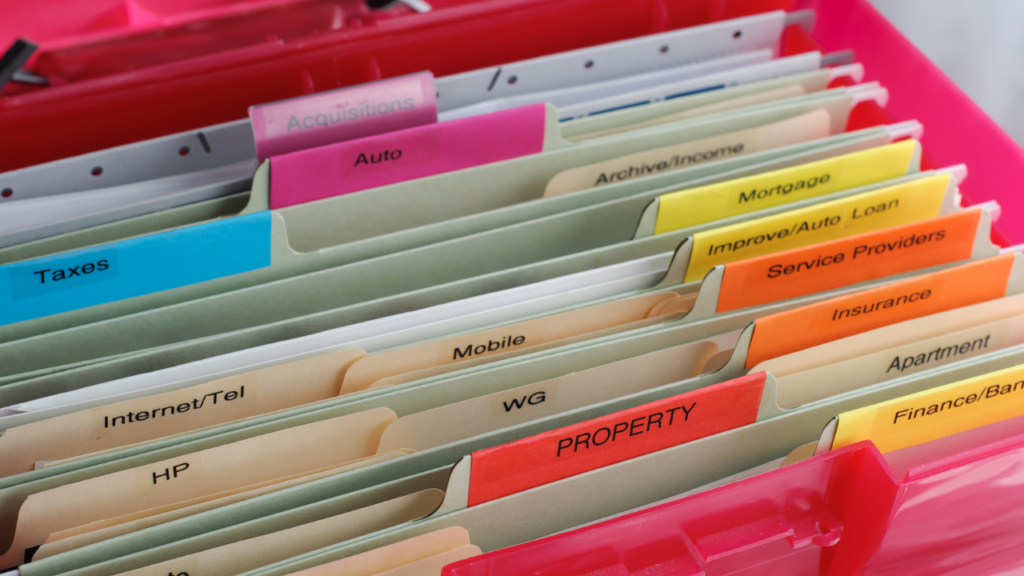
A seller called me about eight months after his closing with a request I have heard more times than I can count. He was preparing his taxes and his accountant was asking for specific documents from his home sale. He knew he had received a stack of paperwork at the closing table. He remembered signing what felt like an entire ream of paper. He was fairly certain he had kept some of it. He was completely uncertain about which pieces he had kept, where they were, and whether he had everything his accountant actually needed. He spent two evenings searching through a box he had packed during the move, found most of what he needed, could not locate two specific items, and ended up calling the title company to request copies of documents he should have had in hand. The entire situation was avoidable with about twenty minutes of organization on the day of closing. Document management after a home sale is one of those tasks that feels genuinely unimportant in the moment because you are focused on the excitement of the sale itself. It becomes very important when tax season arrives, when a legal question emerges, or when you are applying for financing and someone needs documentation of a prior real estate transaction. Here is a complete guide to which documents to keep, how long to keep them, and how to organize them so you can actually find what you need when you need it. Why Document Retention After a Home Sale Matters The documents from your home sale serve multiple purposes over the years following the transaction, and each purpose requires different documents at different times. Tax purposes are the most immediate and most commonly cited reason for retaining home sale documents. Your accountant or tax preparer needs specific information from your sale to correctly report any capital gain or loss, to calculate your adjusted basis in the property, and to document any applicable exclusion or deferral. Without the right documents, this information is either unavailable or requires time-consuming reconstruction through calls to the title company and other parties. Legal protection is a less immediate but equally important reason. Real estate transactions sometimes generate disputes months or years after closing, including questions about what was disclosed, what was agreed to, what condition the property was in at closing, and what representations were made by either party. Having complete documentation of your transaction provides the evidence you need to respond to any post-sale inquiry with confidence. Financial history documentation becomes relevant when you apply for mortgages, lines of credit, or other financing in the future. Lenders sometimes request documentation of prior real estate transactions, particularly for borrowers whose income or financial profile has significant real estate components. Personal records simply have value as a factual account of a major financial transaction in your life, which you may want to reference for a variety of reasons over the years that follow. The Settlement Statement: Your Most Important Document The settlement statement, sometimes called the HUD-1 or the ALTA settlement statement depending on the format your title company used, is the single most important document to retain after your home sale and the one most critical for tax purposes. This document shows the complete financial accounting of your transaction. It reflects the sale price, every deduction from your proceeds including your mortgage payoff, real estate commissions, and closing costs, and your net proceeds at the bottom. It also shows specific line items that may be relevant to your tax basis calculation, including certain prorated taxes and other adjustments. Your tax preparer will specifically request this document when preparing your return for the year of the sale, because it contains most of the information needed to report the transaction correctly. Keep your settlement statement permanently. There is no point at which this document loses relevance entirely, and it is not a document you want to discover you have discarded when you need it. Your Original Purchase Documents To calculate your capital gain or loss on the home sale correctly, you need to know your adjusted tax basis in the property, which starts with what you originally paid for it and is adjusted upward by improvements made during your ownership and downward by any depreciation taken if the property was ever used as a rental. Your original purchase settlement statement from when you bought the home is the primary document establishing your original cost basis. If you have owned the home for many years, this document may be from a decade or more ago, and finding it when you need it requires having retained and organized it through all the moves and life changes that happened in between. If you no longer have your original purchase settlement statement, contact the title company that handled your original purchase closing. Many title companies retain records for a period of years and can provide a copy of the closing documentation. County recorder offices also maintain copies of recorded deeds, though they generally do not have the financial closing documentation. Keep your original purchase documents permanently alongside your sale documents. Improvement and Renovation Records Every capital improvement you made to your home during your ownership has the potential to increase your adjusted tax basis and thereby reduce your taxable capital gain on the sale. This means that every receipt, contract, permit, and invoice for home improvements you made over the years is potentially a tax document. Capital improvements, as distinct from routine maintenance and repairs, are those that add to the value of the property, extend its useful life, or adapt it to a new use. A new roof, an addition, a kitchen renovation, a finished basement, a new HVAC system, new windows, a deck addition, and similar projects are capital improvements that increase your basis. Routine maintenance such as painting, fixing a leaky faucet, replacing a broken window pane, and similar repairs are generally not capital improvements and do not increase your basis. Gather any